
Facing (temporary surface protection):
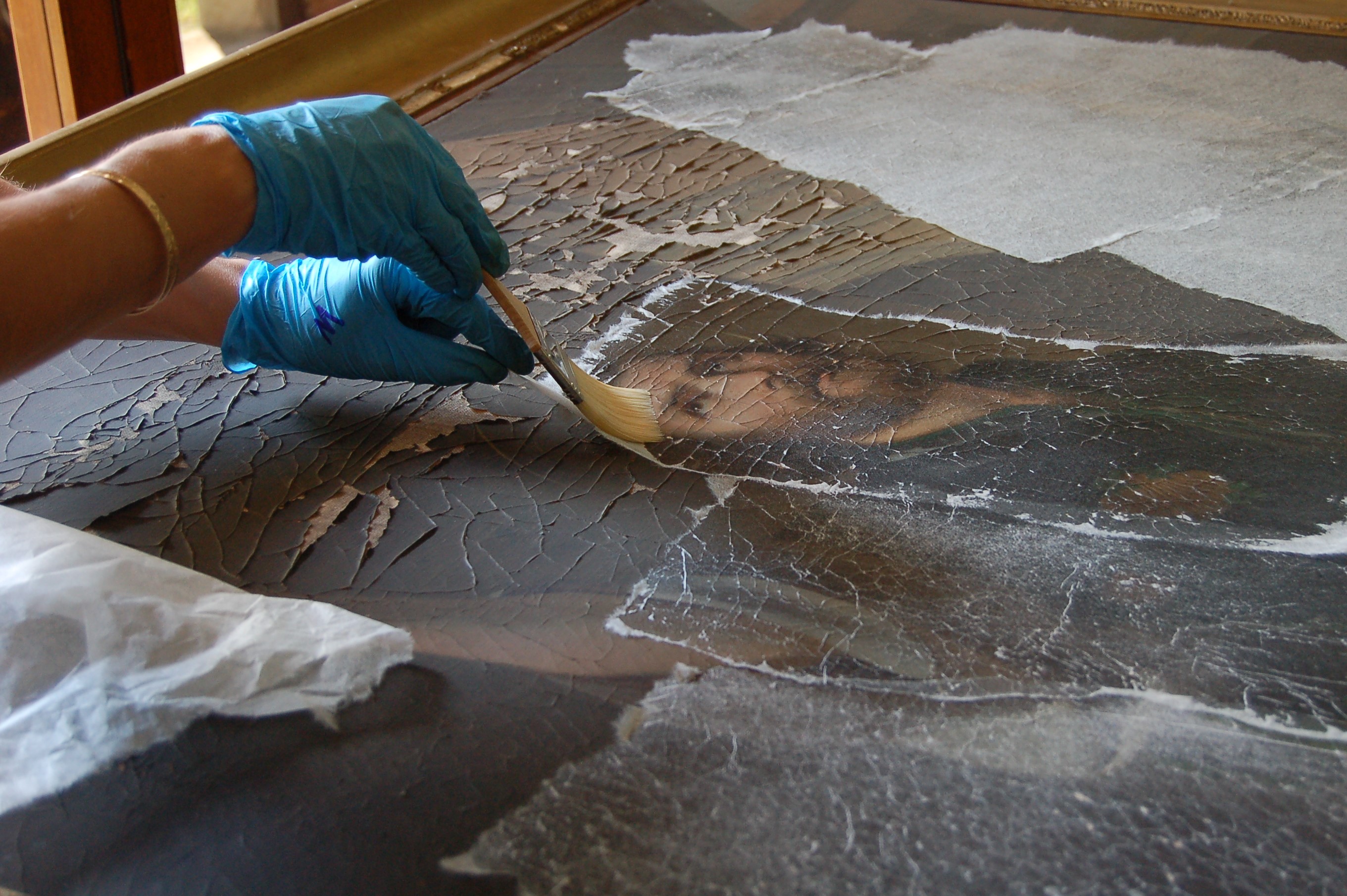
A temporary treatment for partially detached material (paint, plaster, gilding, etc.) in which a protective material, generally Japanese tissue, is adhered to the surface to safeguard it and prevent further loss.
Once positioned on the surface, the tissue is secured by brushing on a natural or synthetic adhesive.
Cleaning:
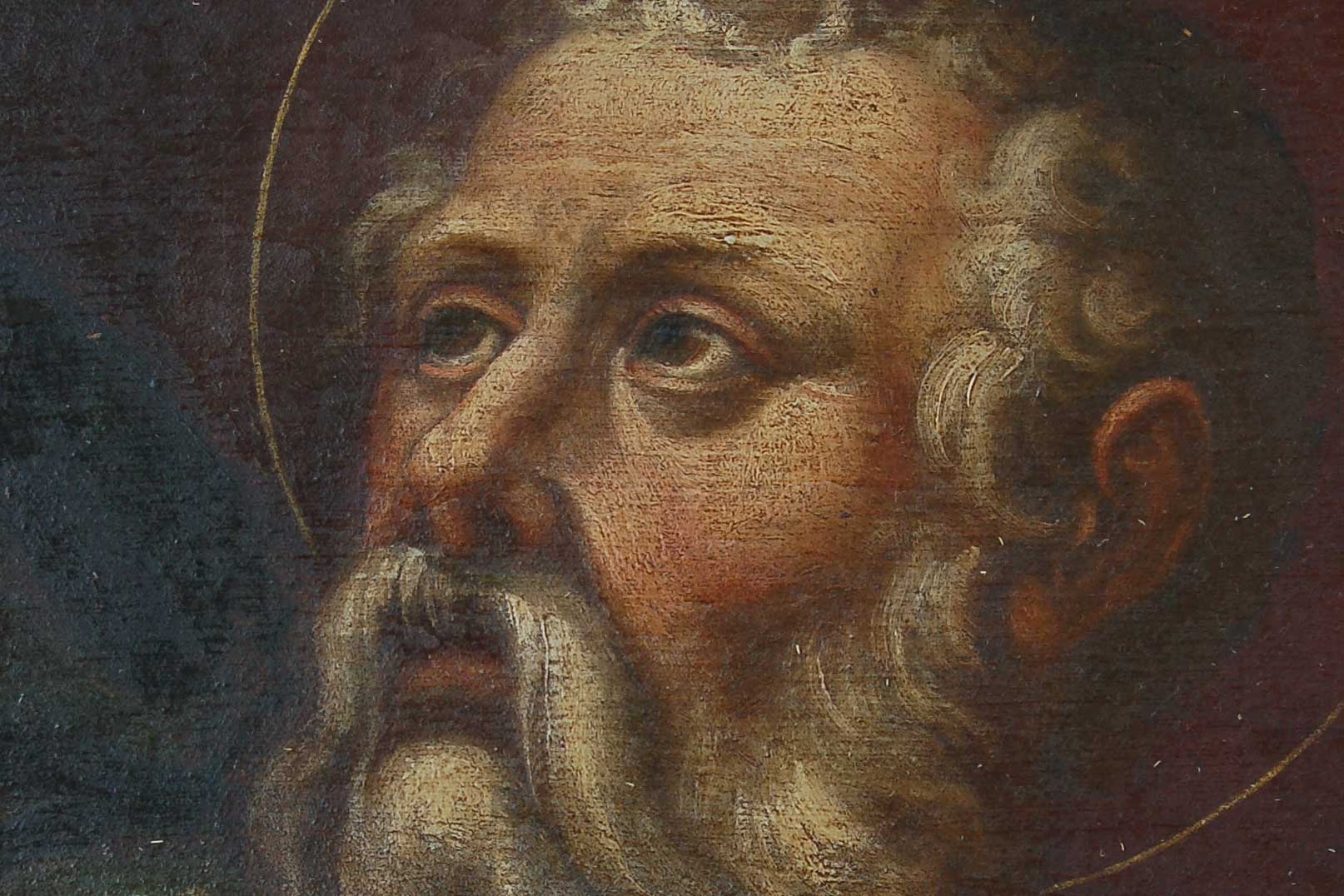
The complete or partial removal of loosely bound deposits (dust, cobwebs, nests, droppings and other externally deposited matter) or firmly adherent deposits (various encrustations, varnishes, retouching and materials from earlier restorations, or deteriorated original coatings that obstruct the appreciation of the work).
In general, cleaning works by dissolving or removing material through physical, chemical or combined methods.
Mechanical cleaning may employ scalpels, ultrasonic tools, probes, brushes, spatulas, micro-abrasive equipment, paintbrushes or cotton swabs.
Chemical cleaning may use water, organic solvents, various reagents, acids and alkalis, buffers, surfactants, complexing and chelating agents, enzymes and gelling agents.
These two approaches often need to be used together.
Typically, the selected cleaning agent is applied to the surface, left to act for the required period, then removed and rinsed away.
Consolidation:
A treatment designed to restore the adhesion and/or cohesion of the materials that make up an artwork (paint layers, ground layers, wooden supports, stone, brick, plaster, etc.).
It is carried out by applying materials of natural or
synthetic origin by brush, spray, impregnation or injection. Depending on the treatment, equipment such as irons, heated spatulas, low-pressure heated tables or vacuum pumps may be required.
Adhesive repairs:
Reattaching fragments of an artwork with adhesives or resins after cleaning the surfaces to be joined. Reinforcing pins may sometimes be inserted into specially prepared holes.
Tools include clamps, vices, drills and spatulas.
Filling and reconstruction:
Adding material to areas of loss (paint, ground layers, stone or wood, for example).
Various filling compounds, mortars or resins are normally applied with spatulas or trowels.
Excess material is removed with damp sponges, abrasive papers, rasps, floats and similar tools.
A similar procedure is used for reconstruction, but the added material is then shaped to recreate the original two- or three-dimensional form.
Paint retouching:
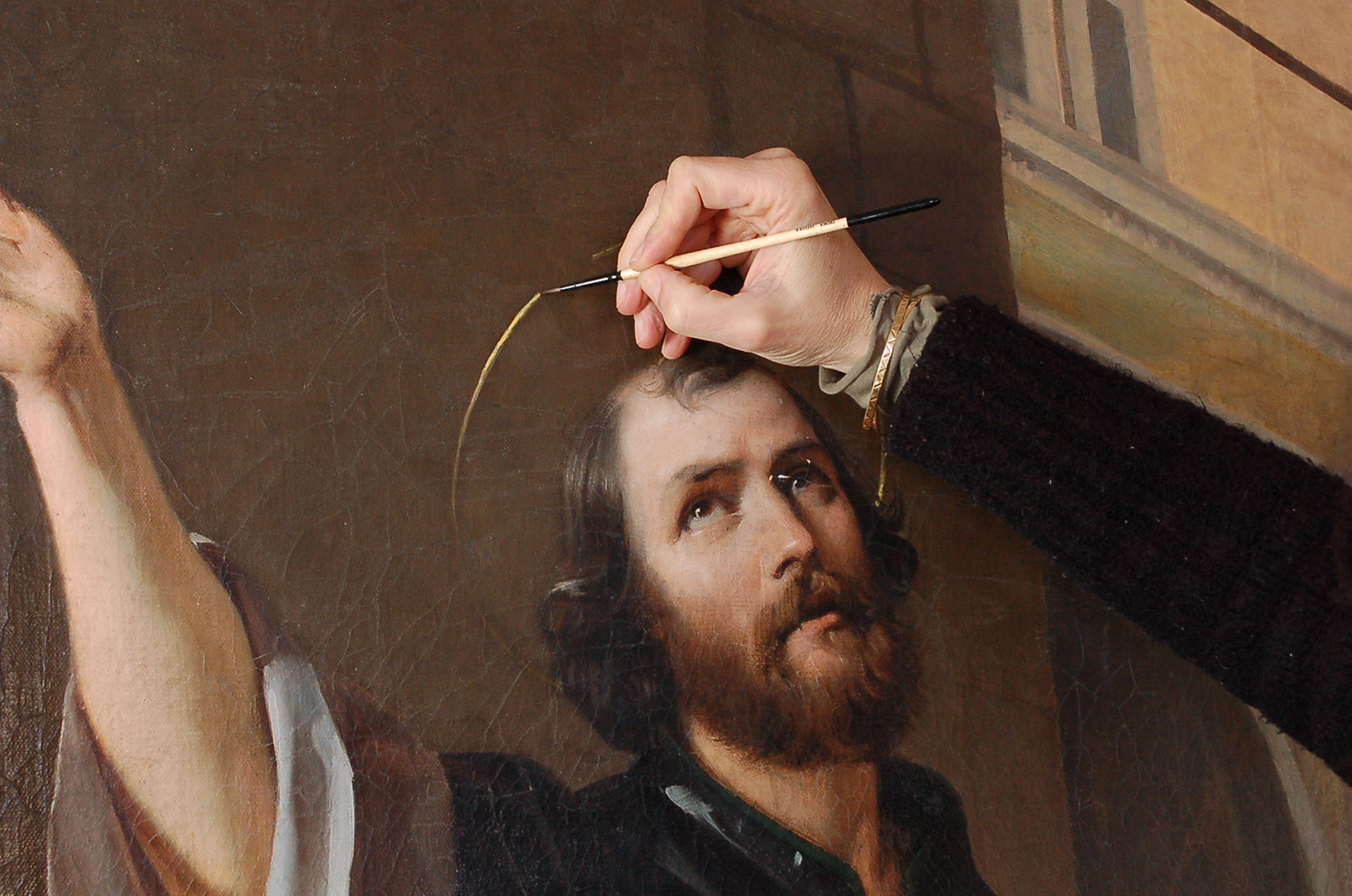
Restoring visual continuity in areas where paint is missing or abraded.
This is generally carried out with brushes, watercolours or conservation retouching colours to ensure the treatment can be reversed. Methods include neutral-tone infilling, tratteggio (fine hatching), chromatic abstraction, chromatic selection and the reintegration of surface texture.
Final protective treatment:
(varnishing, water-repellent treatment, waxing, etc.)
Applying a sacrificial or protective layer at the end of a treatment to help preserve the surface of an artwork.
It may be applied by brush or sprayed with an airbrush.
Disinfection:
A treatment intended to reduce the presence of microorganisms on an artwork by killing or inactivating them.
Biocidal products may be applied by brush, spraying or immersion.
Pest eradication:
The elimination of insects by chemical or physical means.
Treatments may involve insecticides applied by brush, spraying or immersion; microwave equipment; or sealed enclosures connected to systems that regulate conditions for anoxic treatment or the introduction of CO2.
Lining:
(canvas paintings only)
Attaching a new canvas to the reverse of the original canvas to reinforce it and, if necessary, flatten and re-adhere the ground and paint layers to their support.
The lining material may be linen, cotton and occasionally silk or polyester.
Lining methods are generally distinguished by the adhesive used: traditional paste lining or lining with synthetic resins.
After the original canvas has been cleaned, the chosen adhesive is applied to it and, when necessary, also to the new canvas previously stretched on a temporary frame. The two canvases are then brought together. Pressure and heat are usually required to soften and distribute the adhesive, using irons, low-pressure heated tables or vacuum equipment.
Strip-lining:
(canvas paintings only)
Attaching strips of canvas along the perimeter of a painting so that it can be tensioned onto its stretcher.
The materials and procedures are largely the same as those used for lining.
Gilding and silvering:
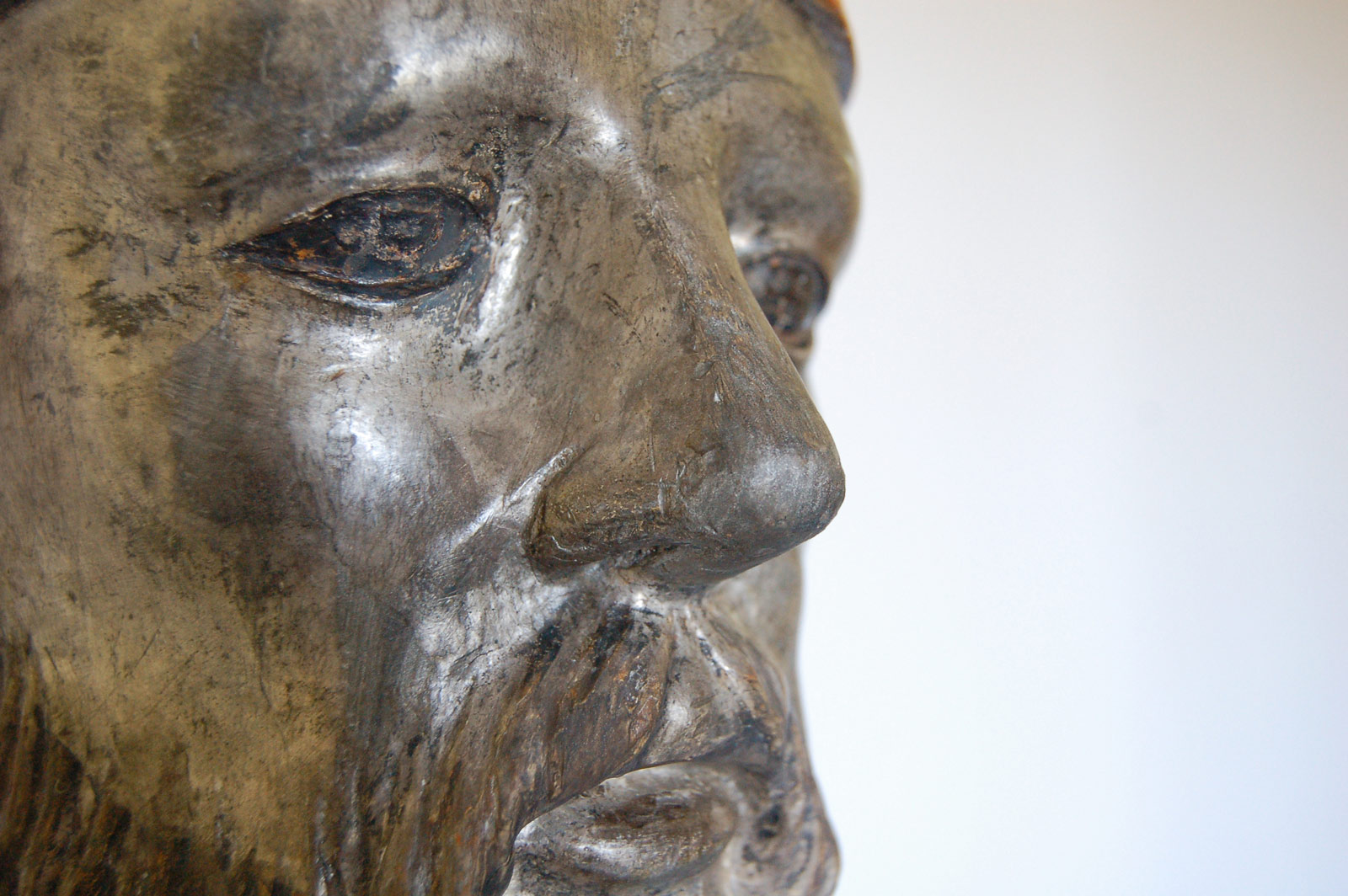
The partial or complete reinstatement of a surface finished with gold or silver leaf, using water gilding or mordant (oil-size) gilding techniques.
Thin metal leaf is applied after preparing the surface and laying down the adhesive appropriate to the chosen technique. The leaf is cut on a gilding cushion and laid with a squirrel-hair tip. After gentle pressure and sufficient drying time, the surface may be burnished with an agate stone.

