
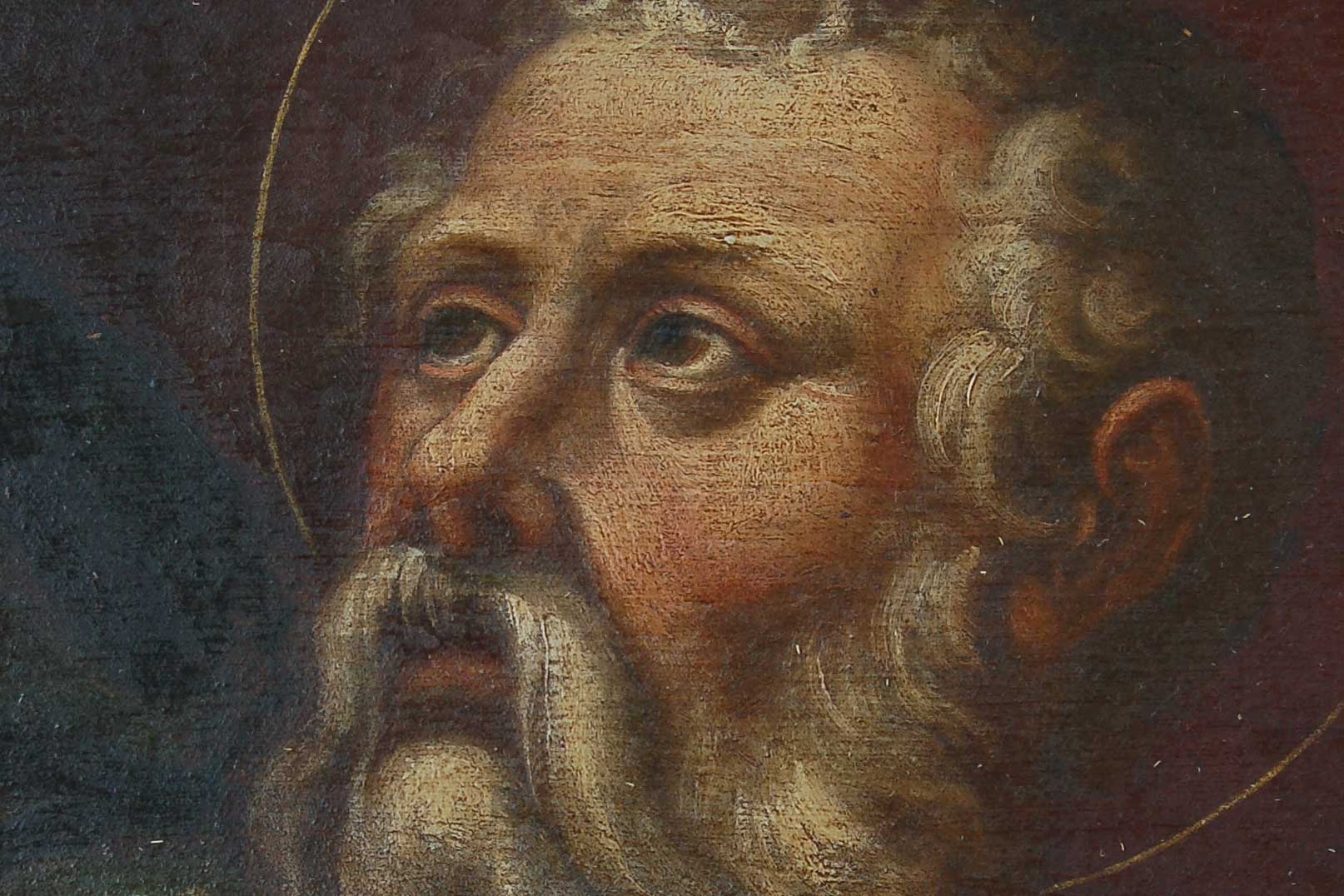
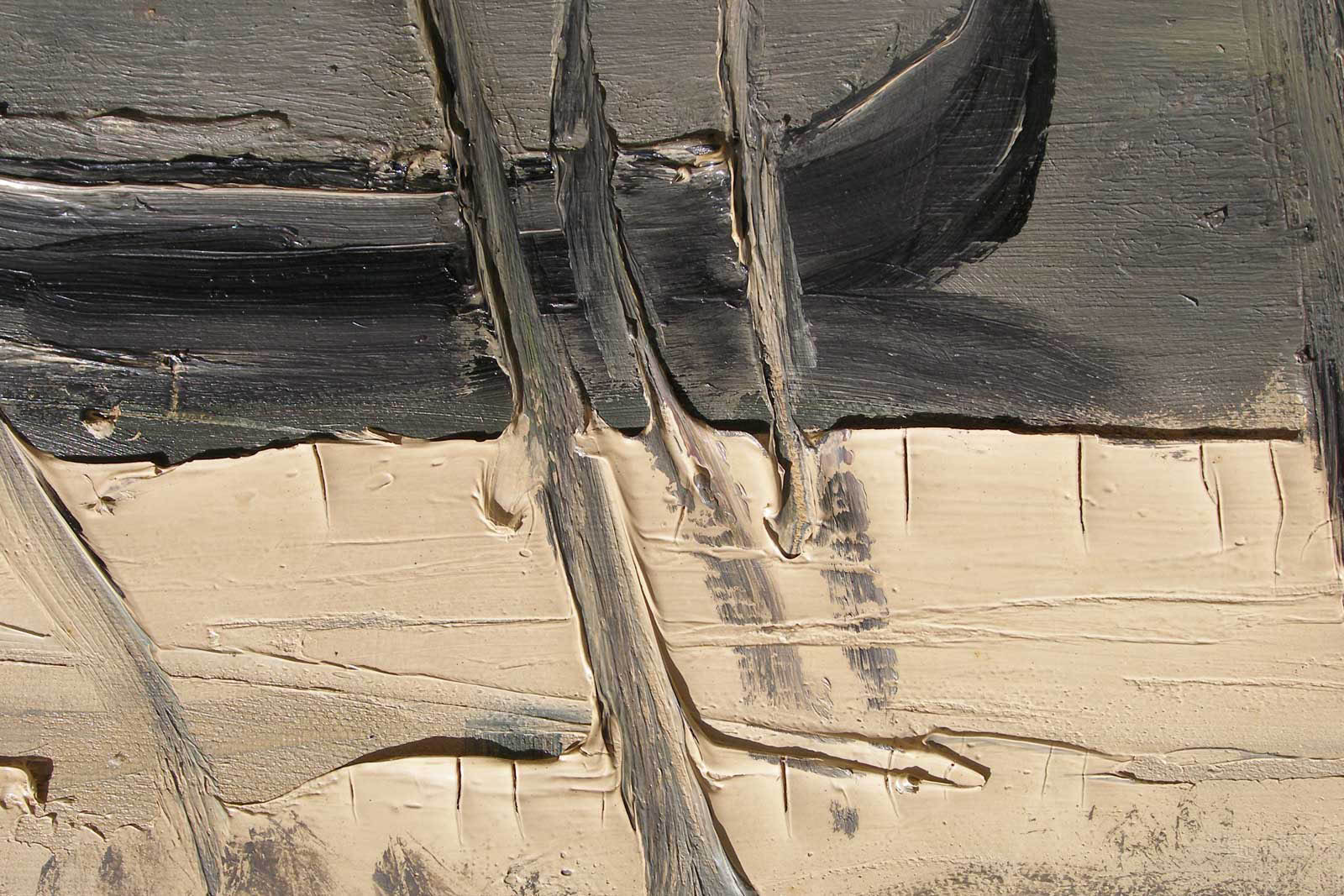

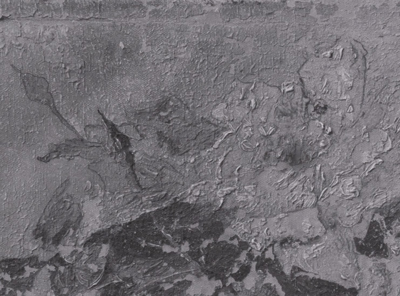
Non-invasive imaging: comparison of visible-light photography (a) and infrared photography (b) to reveal the preparatory drawing
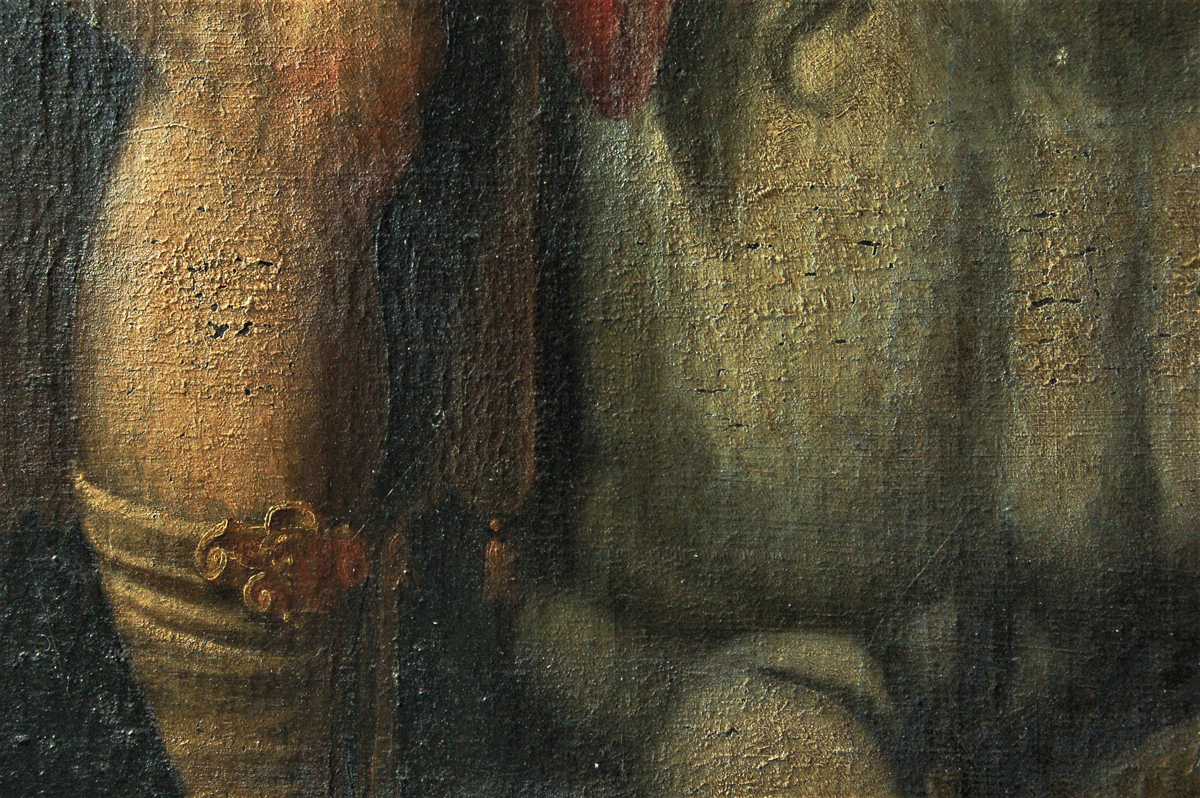
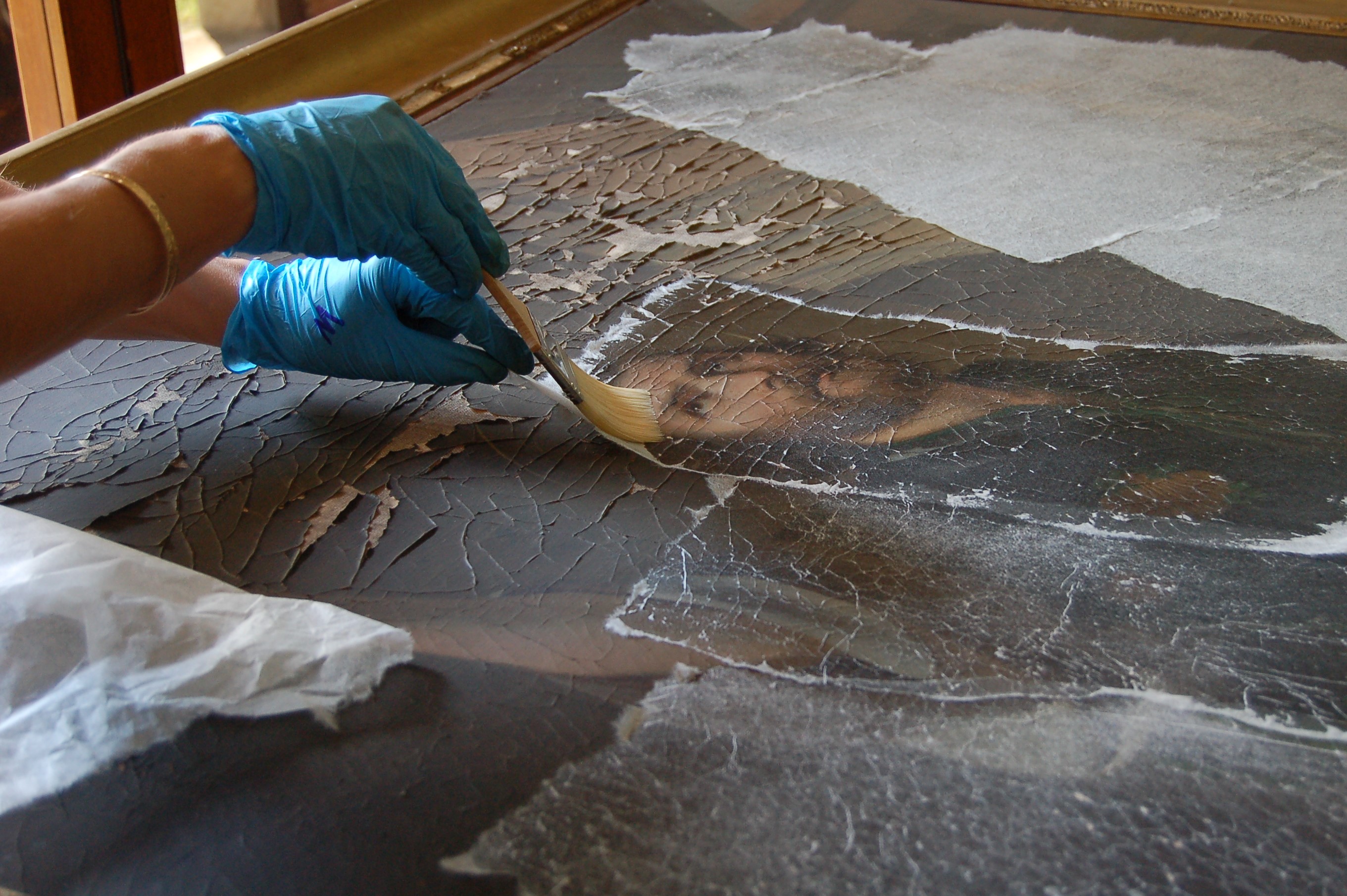
Non-invasive imaging: raking-light photography (c) to reveal lifting in the paint layer
A range of diagnostic investigations can be undertaken before conservation treatment, from non-invasive imaging to invasive chemical and biological analyses. These help identify the constituent materials and examine deterioration in detail, providing information about the artwork and informing treatment decisions.
Some non-invasive imaging techniques can be carried out directly by the conservator using visible-light photography (direct, raking and transmitted light), as well as ultraviolet or infrared illumination.
Certain qualitative chemical analyses can likewise be performed using diagnostic tests: identifying organic substances such as proteins, carbohydrates, starches, oils, waxes, saponifiable compounds and natural resins, or inorganic substances and pigments through tests for carbonates, sulphides, copper and metal alloys, iron and soluble salts.
Specialist expertise may be needed to verify these results or carry out more complex investigations.
Dorica Restauri works with diagnostic specialists experienced in cultural heritage conservation.

